
Renting vs. Owning a Home: An Honest Comparison (and Why Ownership Often Wins Long-Term)
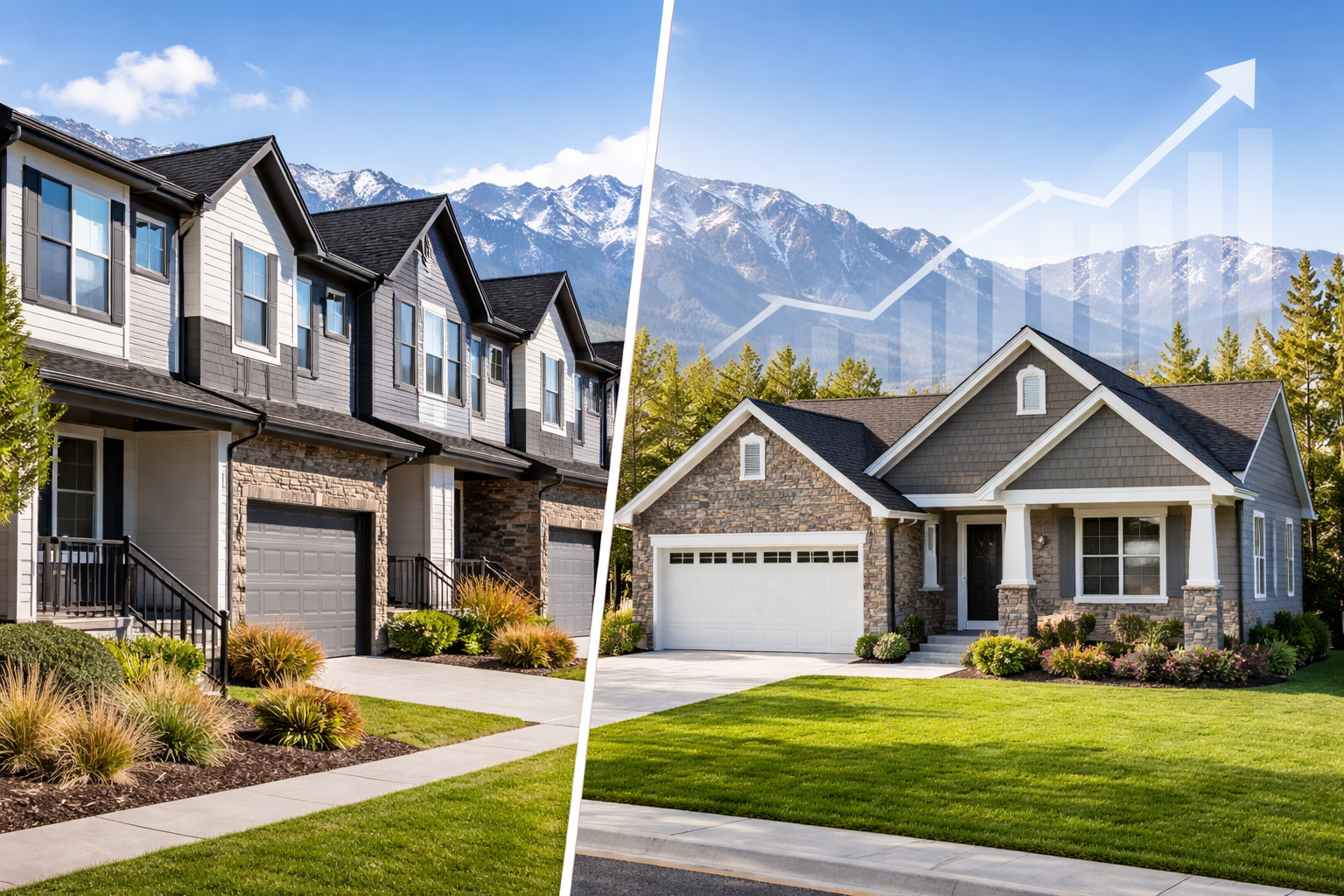
There’s no one-size-fits-all answer to the rent-vs-own debate. The “right” choice depends on your timeline, your cash flow, your lifestyle, and how much uncertainty you can tolerate. But when you zoom out and look at how housing tends to behave over decades, homeownership often becomes one of the most reliable ways for households to build long-term stability and wealth.
Below is a clear-eyed comparison—pros, cons, and the data that usually tilts the scales toward ownership over the long haul.
The best way to frame the decision: time horizon
If you might move soon, renting can be the smarter financial move. Buying has upfront costs (closing costs, moving costs, potential repairs) and selling later adds more friction (agent commissions, seller costs, market timing risk).
But if you’re planning to stay put for a while, ownership starts stacking advantages that renters don’t get: forced savings, payment stability, and the ability to benefit from long-run appreciation.
Why renting can be a great option (sometimes)
Renting isn’t “throwing money away.” It’s paying for flexibility and simplicity.
Renting can be the better choice when:
-
You expect to move within the next 1–4 years.
-
Your income is variable and you want fewer fixed obligations.
-
You don’t want surprise expenses (roof, HVAC, plumbing, etc.).
-
You’d rather keep cash accessible for business, investing, or life changes.
-
You’re in a market where buying would stretch your budget uncomfortably.
What renting does well:
-
Predictable short-term costs (rent + renter’s insurance)
-
No maintenance responsibility
-
Easier relocation
-
Often lower upfront cash requirement
Where renting gets financially painful over time
Renters typically face two long-term headwinds:
1) Rent usually rises, while a fixed mortgage payment can stabilize
Rents don’t stay flat forever. One long-running measure of rent prices (CPI “Rent of Primary Residence”) rose from 84.7 (Jan 1981) to 441.285 (Jan 2026)—that’s about 3.7% average annual growth over 45 years.¹
Even if your rent only increases “a little” each year, compounding adds up.
2) You don’t build equity from your housing payment
With renting, your monthly payment buys housing for the month—nothing accumulates. With owning, part of your payment can build equity (principal reduction), and your home value can change over time (up or down).
The long-term advantages of owning (and why they matter)
1) Home prices have historically trended upward over long periods
Using the S&P Case-Shiller U.S. National Home Price Index (a widely referenced home price index), the index increased from 63.962 (Jan 1987) to 330.447 (Nov 2025)—about 4.3% average annual growth over that span.²
That doesn’t mean prices rise every year (they don’t), but over long periods the trend has generally been up.
2) “Forced savings” is real—and it’s powerful
Most people don’t invest the difference between renting and owning perfectly every month. Ownership creates a kind of built-in discipline: you pay your mortgage, and over time (typically) you build equity.
3) The wealth gap between homeowners and renters is massive
The Federal Reserve’s Survey of Consumer Finances (2022) found:
-
Median net worth of homeowners: about $396,200
-
Median net worth of renters (non-homeowners): about $10,400³
That gap isn’t only caused by homeownership—but home equity is a major driver of why typical homeowners end up with far more wealth over time.
4) Payment stability and lifestyle control
A fixed-rate mortgage can make your core housing payment more predictable than rent over time. And beyond the math, there’s value in stability: control over your space, ability to renovate, and not being subject to lease renewals or landlord decisions.
5) Ownership becomes dramatically cheaper later in life for many households
A growing share of owner-occupied homes are owned free and clear (no mortgage). Census data shows the share of U.S. owner-occupied homes owned free and clear rose from 34.4% (2010–2014) to 39.4% (2020–2024).⁴
That’s a big deal: eventually, many owners reduce their housing cost to taxes/insurance/maintenance—while renters keep paying market rent forever.
The real costs (and risks) of owning—don’t ignore these
Owning isn’t automatically better. It comes with real tradeoffs:
-
Upfront costs: down payment, closing costs, moving, initial repairs
-
Ongoing non-mortgage costs: property taxes, insurance, HOA (if applicable), maintenance
-
Illiquidity: your money is tied up in a property
-
Market risk: values can drop in the short-to-medium term
-
Opportunity cost: cash used for down payment could be used elsewhere
The bottom line
Renting is a valid, sometimes smart, financial decision—especially for flexibility and short timelines. But if you’re planning to stay in one place and can buy responsibly, homeownership has historically offered a rare combination of benefits: a place to live and a long-term wealth-building engine through equity, long-run price growth, and payment stability.
Footnotes (data sources)
-
CPI “Rent of Primary Residence” index values 84.700 (Jan 1981) and 441.285 (Jan 2026) from FRED (BLS CPI series).
-
S&P Case-Shiller U.S. National Home Price Index values 63.962 (Jan 1987) and 330.447 (Nov 2025) from FRED.
-
2022 Survey of Consumer Finances: median net worth $396,200 (homeowners) vs $10,400 (renters/non-homeowners).
-
Share of owner-occupied homes owned free and clear: 34.4% (2010–2014) to 39.4% (2020–2024), U.S. Census Bureau (ACS 5-year).
-
U.S. homeownership rate 65.7% in Q4 2025 (FRED series based on Census HVS).